
Why Titanium Cutting Boards Are Taking Over Modern Kitchens (And Why Yours Might Be Next)
Take a moment to think about how many times a day you use your cutting board. From slicing fruit in the morning to prepping dinner at night, it’s one of the most hardworking tools in your kitchen. Yet, strangely, it’s also the most overlooked—until it starts cracking, warping, smelling, or worse… harboring bacteria you can’t see.
For years, we’ve relied on wooden, plastic, bamboo, and even glass cutting boards without questioning if they’re really the best options. But times are changing. Health-conscious and environmentally aware consumers are embracing a new, game-changing material in kitchenware: titanium.
This isn’t just a trend—it’s a quiet revolution happening right on our countertops.
The Hidden Problems with Traditional Cutting Boards
Let’s face it: the classic materials we’ve trusted for generations all come with compromises, and some of them are more serious than we realized.
Wood – Charming but High Maintenance
Wooden cutting boards have long been a favorite for their traditional look, but beneath their cozy appearance lies a problem: wood is porous. It soaks up juices from raw meat and vegetables, creating the perfect breeding ground for bacteria. If not constantly oiled and maintained, wooden boards crack and warp, shortening their lifespan.

Plastic – Cheap Convenience at a Cost
Plastic cutting boards were introduced as a cleaner, affordable alternative. But every slice leaves deep grooves—and those grooves are nearly impossible to clean completely. Over time, they accumulate bacteria and even shed microplastics into your food. Not exactly appetizing.
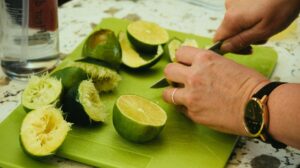
Bamboo – The “Eco-Friendly” Compromise
Bamboo is often marketed as the sustainable choice, but many bamboo boards are bound together with chemical adhesives. They’re also surprisingly hard on knives and prone to cracking. You save the planet with one hand, but dull your knives and expose yourself to hidden toxins with the other.

Glass – Stylish but Impractical
Glass cutting boards might look sleek and modern, but try chopping on one for more than 10 seconds and it sounds like a construction site. They shatter easily, dull knives instantly, and offer a slippery cutting surface. They win on aesthetics and lose on functionality.
Enter Titanium: The Future of Cutting Boards
Now imagine a cutting board that:
- Doesn’t crack, warp, or absorb liquid
- Is naturally antibacterial
- Never dulls your knives
- Can be passed down like heirloom cookware
- Is 100% recyclable and environmentally responsible
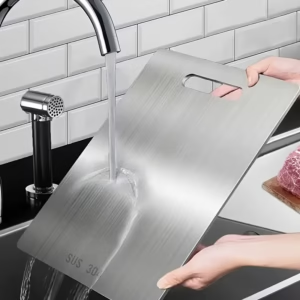
That’s not science fiction—it’s titanium.
Titanium has long been used in aerospace engineering and medical implants because of its incredible strength, corrosion resistance, and biocompatibility. Today, it’s landing in the kitchen—and the result is nothing short of revolutionary.
Why Titanium Is Changing the Game
🔒 Ultra-Hygienic
Titanium is non-porous, meaning it doesn’t hold onto moisture or bacteria. Unlike wood or plastic, there are no hidden crevices where germs can hide. A quick rinse or wipe is all it takes to sanitize.
🗡 Knife-Friendly
Surprisingly, titanium is gentle on blades. It won’t dull your expensive chef’s knife like glass or bamboo—which means less sharpening and longer-lasting tools.
🌿 A Sustainable Powerhouse
Unlike disposable plastic boards and chemically treated bamboo, titanium is built for life. It’s fully recyclable and so durable, you may never need to replace it. Less waste, more value.
🔥 Heat and Acid Resistant
Whether you’re working with hot pans or acidic foods like lemons and tomatoes, titanium stands strong. It doesn’t corrode, stain, or react.
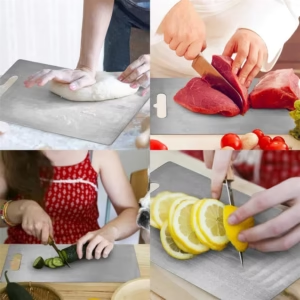
A Long-Term Kitchen Investment
Think of a titanium cutting board like the cast iron skillet of cutting surfaces—a tool that becomes a permanent part of your kitchen. While traditional materials wear out, get replaced, and end up in landfills, titanium stands the test of time. In fact, many users describe buying one as a once-in-a-lifetime purchase.
Final Thoughts: A Smarter Choice for a Healthier Kitchen
We’re living in a time where every choice we make matters—both for our personal health and the health of our environment. Switching to titanium isn’t just about owning something cool and modern. It’s about investing in cleaner food preparation, reducing kitchen waste, and stepping into a new era of sustainable living.
So the next time you slice an apple or chop vegetables, ask yourself:
Is my cutting board working for me—or against me?
Because in the kitchen of the future, titanium isn’t just an upgrade—it’s the standard.
✨ Interested in a version of this blog tailored for a product landing page or brand story? I can customize the tone to match your audience (premium, eco-conscious, minimalist, chef-inspired, etc.). Just let me know!